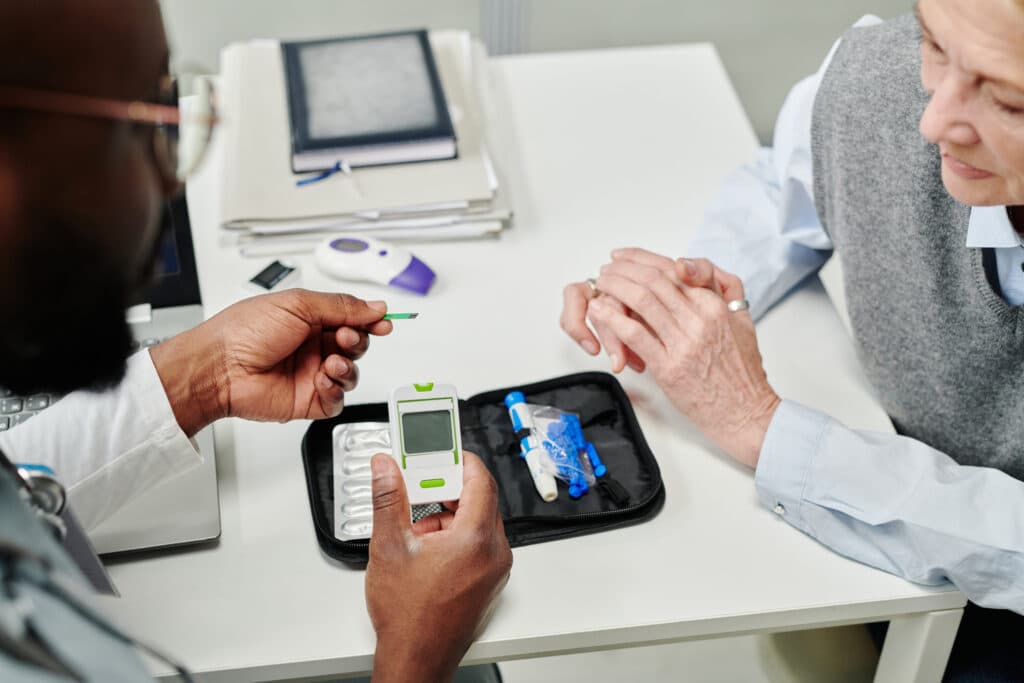

Diabetes management goes far beyond blood sugar control. Many patients face painful musculoskeletal issues like frozen shoulder, trigger finger, carpal tunnel syndrome, or diabetic neuropathy that make daily life difficult. An ultrasound-guided injection offers a highly accurate, minimally invasive solution that targets these problems directly. Using real-time ultrasound imaging, doctors can place medication exactly where it’s needed, reducing risks and improving results, especially for people with diabetes who often heal more slowly.
Here is a clear and detailed guide to how ultrasound-guided injections work and why they are becoming an important part of diabetes treatment.
What Are Ultrasound-Guided Injections?

An ultrasound-guided injection is a modern procedure where a doctor uses live ultrasound images to guide a thin needle into a joint, tendon, nerve sheath, or soft tissue. Unlike blind injections, the ultrasound screen shows bones, muscles, nerves, and blood vessels in real time. This precision ensures the medicine reaches the exact spot causing pain or inflammation.
For diabetic patients, this accuracy is especially valuable because their tissues can be more fragile and recovery can be slower. The procedure usually takes 10–20 minutes and is done in an outpatient clinic without surgery.
Common Diabetes-Related Conditions Treated with Ultrasound-Guided Injections
Diabetes increases the risk of several painful conditions that respond well to ultrasound-guided injections:
- Frozen shoulder (adhesive capsulitis): Causes stiffness and severe pain. Guided steroid or hydrodistension injections help restore movement.
- Trigger finger: Precise injection into the tendon sheath reduces inflammation and stops triggering.
- Carpal tunnel syndrome: Ultrasound guidance ensures safe injection near the median nerve without damage.
- Diabetic neuropathy and nerve entrapment: Hydrodissection helps release trapped nerves and reduces pain.
- Joint osteoarthritis or tendinopathy: Reduces inflammation and improves mobility.
These treatments help break the cycle of pain that often worsens diabetes management.
Key Benefits of Ultrasound-Guided Injections

- High accuracy with real-time imaging
- Lower risk of complications
- Faster pain relief
- Outpatient and minimally invasive procedure
- Better outcomes for diabetic patients
These injections often reduce the need for long-term pain medication and support physiotherapy recovery.
What Happens During the Procedure?
- The doctor cleans the area and applies sterile gel
- Ultrasound probe locates the exact target
- Local anesthetic numbs the skin
- A fine needle is guided using real-time imaging
- Medication is injected precisely
- The procedure is completed within minutes
Most patients feel only mild pressure or discomfort.
Recovery and Aftercare
- Rest the area for 24–48 hours
- Avoid heavy activity initially
- Monitor blood sugar levels if steroids are used
- Mild pain flare may occur but settles quickly
- Return to normal activity within a few days
- Follow-up may include physiotherapy